

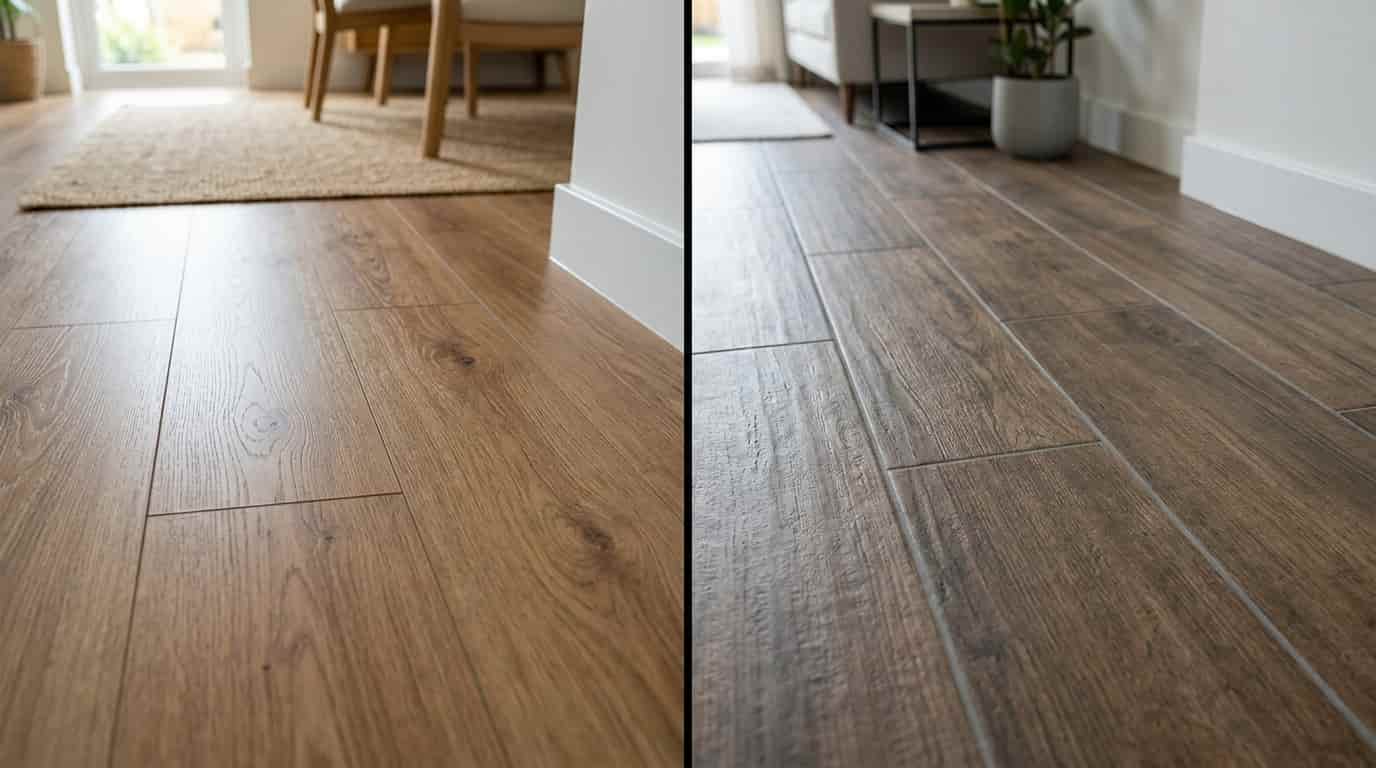
Choosing between wood effect tiles vs laminate is one of the most common flooring decisions Irish homeowners face. Both options deliver the warm, natural look of timber without the cost or upkeep of real wood, but they perform very differently depending on where you use them and how you live. This guide breaks down the key differences so you can make a confident, informed choice.
Wood effect tiles, most commonly made from porcelain, are designed to replicate the appearance of natural timber grain. Modern printing technology has made them remarkably convincing, with realistic knot patterns, colour variation, and surface texture. You can browse a wide range of tiles that look like wood in various plank sizes, tones, and finishes to suit everything from contemporary to rustic interiors.
Laminate is a multi-layer synthetic flooring product with a photographic timber layer bonded beneath a clear protective coating. It sits on a dense fibreboard core and is designed to click together for straightforward installation. It tends to cost less upfront than porcelain tiles and is a popular choice for living rooms and bedrooms across Ireland.
This is where the two options differ most significantly. Porcelain wood effect tiles are completely waterproof. They will not warp, swell, or stain when exposed to moisture, making them an excellent choice for kitchens, bathrooms, utility rooms, and hallways. In Ireland’s damp climate, this matters more than most people initially realise.
Laminate, on the other hand, contains a fibreboard core that is vulnerable to moisture. Spills left sitting too long, or humidity from steam and underfloor heating, can cause the boards to lift or buckle over time. Most laminate manufacturers advise against using it in wet rooms or areas with heavy moisture exposure.
Porcelain tiles are exceptionally hard-wearing. They resist scratches, heavy foot traffic, and surface staining far better than laminate. For families with children or pets, or for tradespeople fitting out a busy property, porcelain wood look tiles are a long-term investment that holds up well over decades with minimal degradation.
Quality laminate flooring is durable in its own right and performs well in lower-traffic areas, but it is more susceptible to scratching from furniture legs and pet claws. The surface layer can also dull over time in high-use zones, and unlike tiles, it cannot be refinished.
Both options have improved dramatically in recent years. High-quality porcelain wood effect tiles now replicate timber grain with impressive accuracy, and the range of available finishes, from pale ash tones to deep walnut shades, gives homeowners plenty of flexibility. The Casey Tiles showroom in Cahir, Co. Tipperary stocks an extensive selection of wood-effect tiles in a variety of plank sizes and finishes, so you can see them in person before committing.
Laminate has a slightly more uniform appearance, which some homeowners prefer for its consistency. Premium laminate ranges do a good job of mimicking natural variation, but side-by-side with high-end porcelain, the difference in realism is often noticeable.
Laminate is generally quicker and easier to install, particularly for confident DIYers. The click-lock system requires no adhesive and can be laid over most existing floors. However, longer plank formats, which are popular for a more contemporary look, can be tricky to align correctly without experience.
Wood effect porcelain tiles require more preparation. The subfloor must be level, and the tiles need to be laid with adhesive and grouted. For most homeowners, professional installation is the better route, which adds to the overall cost but results in a finish that is built to last.
Laminate has a lower upfront cost per square metre than porcelain tiles, and installation is typically cheaper too. However, the long-term picture is worth considering. Tiles rarely need replacing if properly laid and maintained. Laminate, particularly in busy areas, may need to be replaced within ten to fifteen years. When you factor in replacement costs, quality porcelain often works out as better value over the lifetime of the floor. Keep an eye on Casey Tiles’ special offers for competitive pricing across both tiles and laminate ranges.
Porcelain wood effect tiles are low maintenance. Regular sweeping and mopping is all that is needed, and there is no risk of water damage from cleaning. Grout lines do require occasional attention, but with the right sealer applied, this is straightforward to manage.
Laminate needs more careful day-to-day maintenance. It should only be cleaned with a damp mop, never soaked, and harsh cleaning products can damage the surface layer. Scratches and chips are difficult to repair without replacing individual boards.
Wood effect tiles are the stronger choice for kitchens. Spills, steam, and heavy use make waterproof porcelain the practical option. If you are renovating your kitchen floor, explore the full range of kitchen tiles available at Casey Tiles, including timber-effect styles that complement a wide range of cabinetry and worktop finishes. For something with more personality, patterned kitchen tiles are also worth considering as an accent or feature area.
Laminate should not be used in bathrooms. The moisture levels alone make it an unsuitable choice. Porcelain wood effect tiles, however, work beautifully in bathrooms, adding warmth without the risk of water damage. If you prefer a cooler, contemporary feel, grey bathroom tiles are another popular option. Browse the full bathroom tiles range for inspiration.
These are the areas where laminate performs at its best. Lower moisture levels, moderate foot traffic, and the comfort underfoot that laminate provides make it a sensible and cost-effective choice for living spaces and bedrooms. Underfloor heating compatibility is worth checking for whichever option you choose.
If your priority is durability, waterproofing, and a floor that will last for decades with minimal upkeep, wood effect porcelain tiles are the better investment, especially in kitchens, bathrooms, hallways, and utility rooms. If you are working to a tighter budget and fitting out a living room or bedroom where moisture is not a concern, quality laminate is a practical and attractive option.
The good news is that you do not have to choose one or the other for your entire home. Many Irish homeowners use tiles in wet and high-traffic areas and laminate in bedrooms and living spaces, getting the best of both.
At Casey Tiles in Cahir, Co. Tipperary, you can see both wood effect tiles and laminate flooring side by side in our spacious showroom, with knowledgeable staff on hand to help you find the right fit for your home and budget. We supply homeowners, builders, and tradespeople right across Ireland. If you would like advice before visiting, feel free to get in touch with the team and we will be happy to help.